
Slow Internet During Storms? Here’s Why
I’m just going to say it: winter sucks.
Don’t get me wrong, I’m one of those weirdos who loves winter. Getting cozy with a mug of coffee or hot chocolate after an adventure out in a winter wonderland is absolute peak. But I’ll be the first to admit that it can cause so many problems.
So. Many. Problems.
From scraping your car off five minutes before work because an ice-related power outage killed your alarm clock, to slipping and sliding all over the front walk when you’re trying to put out your garbage bin, cold and snowy weather can be the absolute worst.
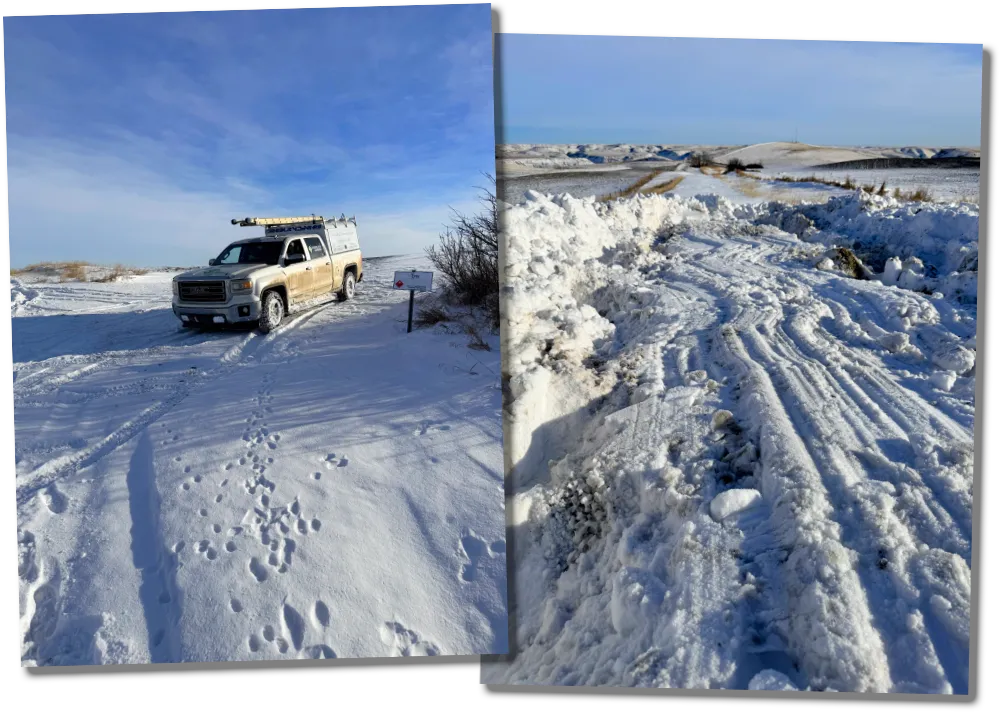
Funny story. Just after Christmas, not one but two of our technicians got stuck in the snow over at a tower site. It didn’t look too bad, but the snow was deeper than expected, and the truck ran aground like a beached whale on packed snow.
If John hadn’t been around to go to their rescue, they might still be out there, huddled around a Netflix holiday fireplace, watching that phone battery creep toward empty. At least they’d have good internet while it lasted.
Now, you’re probably thinking, “Laura, how is this relevant?”
And you know what? Fair. I digress.
The Point Laura’s Trying to Make: Sometimes, Weather Can Affect Your Internet
One of the biggest problems with winter, and the reason we get so many frustrated customers calling in during snowstorms, is that it can affect fixed wireless internet systems like ours. If you’ve ever wondered, that’s the sort of internet we provide here at Aerial Internet Solutions, and it’s really not as complicated as it sounds.
Rather than connecting your home physically with copper or fibre optic cables, the internet is delivered to your home via radio waves. You have a radio dish somewhere on your roof. Mine’s on my roof; yours probably is too. That dish catches the radio waves broadcast from our towers, kind of like how your cell phone receives a signal. These waves travel in a straight line, and this is called line of sight.
As long as the path between dish and tower is clear, your signal is strong. But some types of weather (or even obstacles like trees) can get in the way and block some of these waves, weakening your signal. That’s when you’ll experience buffering, slow loading, or high latency (ping) in online games.
Bad Weather and How It Hurts
Grandma used to say that snow is just raindrops wearing fluffy coats. I mean, it’s not totally wrong, but…. Anyway, the point is, rain and snow can have a similar effect on radio signals, just in different ways. Let’s take a look at the most common types of weather that cause disruptions.
Snow and Ice
If you guessed that I’d talk about snow first, you win… nothing at all. I’ve literally been talking about snow for 6,000 years, of course I’m going to mention it first.
Snow is about as Canadian as the winter sports that form the foundation of our national identity. It’s also a pain in the a—behind. How does snow affect your signal? I’m glad I asked for you. There are a couple ways it can happen.
Snow can block the signal
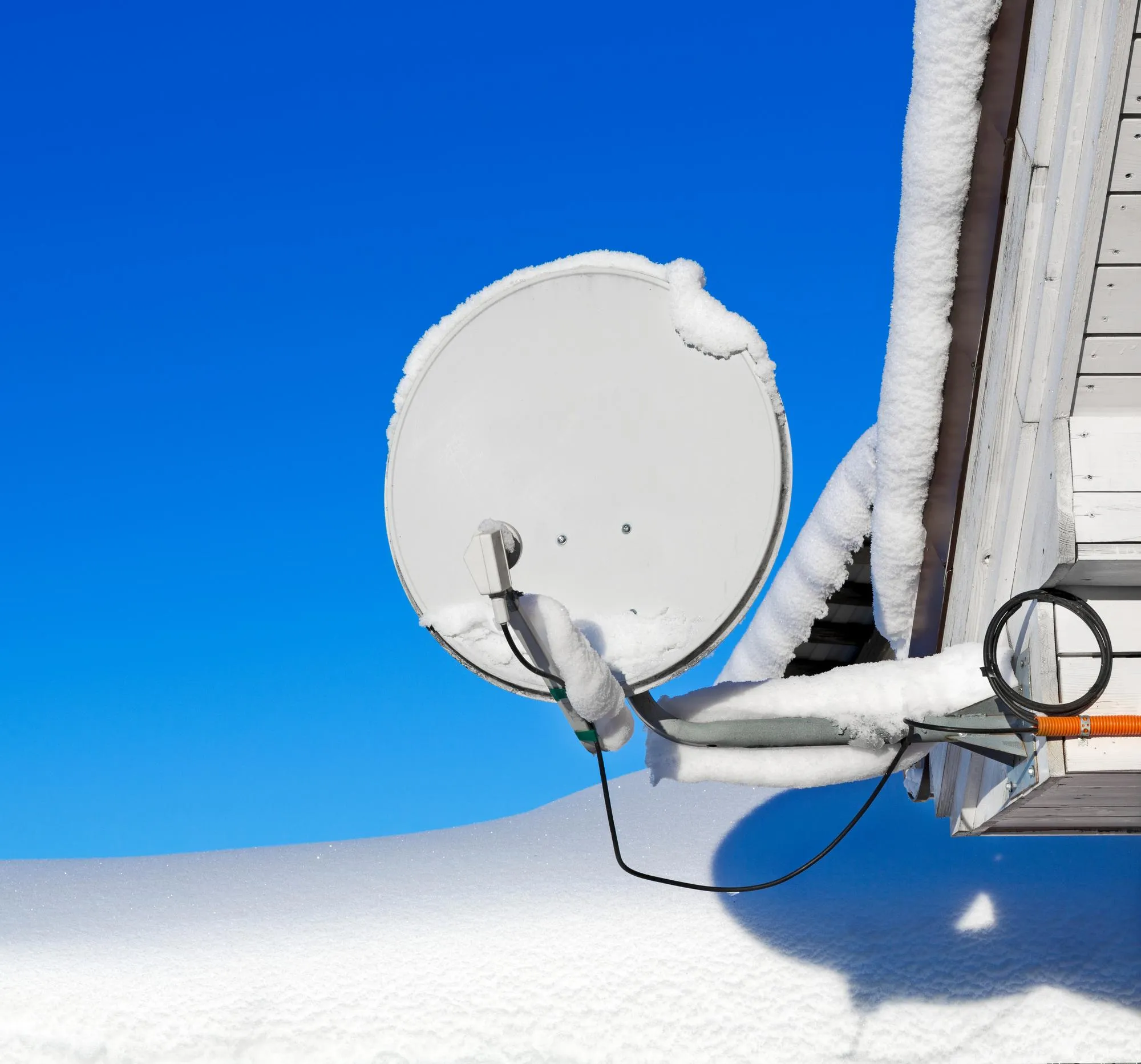
Light, fluffy snow makes excellent snow cones, but doesn’t usually cause much of a problem for signal strength. You might notice a little signal degradation, but usually not much. Wet, heavy snow is the best for snowballs, but it can stick to your dish and weaken the signal. If enough snow builds up, it can block the path between your dish and our tower.
This isn’t only limited to your dish, either. During my first winter here at Aerial Internet Solutions, we got a crazy wet snow dump, and it gummed up some of the dishes on our towers. It’s extremely rare, but it can happen. That blocked the signal at its source, so very few radio waves could even get out. Unfortunately, those dishes are hundreds of feet in the air, so they’re kind of unsafe to get to when it’s snowing and slippery.
Ice can build up on equipment
Usually not an issue unless there’s a lot of freezing rain, but ice build-up can make the dish heavier, and over time, this can cause it to shift. Even a tiny change in direction can affect your connection, since fixed wireless works best when the dish and tower are pointed exactly at each other.
Rain
Rain affects radio signals because water absorbs and scatters the signal. This is sometimes called rain fade. This actually applies to snowfall too. Oh, you thought we were done with snow?? Ha! We’ll never be done with snow! Like William Afton, it always comes back.
Ahem. Anyway, a light rain doesn’t usually have much effect on signal strength. I’ve never noticed my speeds dip much during a spring drizzle. In fact (and to my honest surprise), I’ve had better and more consistent Wi-Fi speeds since switching to Aerial than I ever had with the Big Guy’s gigabit fibre.
Heavy downpours, on the other hand, can cause temporary slowdowns until the rain eases up. Think about it: if raindrops can scatter radio signals, then it stands to reason that more raindrops between your dish and the tower will scatter more signals. Just give it time. The sun will come out soon enough, and your internet will speed right back up.
Fog
Fog might not look like much, but it’s made of tiny water droplets floating in the air. Like rain and, you guessed it, snow, these droplets can slightly weaken radio signals, especially if you’re farther away from the tower. It’s that darn rain fade, man. The effect is usually small, but on really foggy days—like, Pyramid Head wouldn’t look out of place foggy—you might notice slower speeds until it clears up.
Wind
Has anyone else noticed how windy it’s been lately? Maybe it’s just me. We bought a house in July, so for the first time in years, we’re not in a basement suite anymore. Hallelujah! It also means I notice the wind a lot more, especially when we live near the badlands and the wind tunnel that creates.
Most of the time, wind is probably not going to do much to your internet. Strong windstorms can, however, create problems with dish alignment over time, so that’s something to watch out for. Repeated powerful wind gusts might loosen the hardware holding your dish in place, leading to misalignment.
Also, if there are any trees that aren’t normally blocking your line of sight, they might get in the way if the wind blows them around, weakening your signal. And if there’s a ton of dust in the air, that might scatter radio waves and weaken signals a bit.
Extreme Cold
Cold weather doesn’t really affect the radio waves themselves, but it can affect the equipment. Very low temperatures can wreak havoc on many electronics, and our radios are no exception. If your car won’t start in -40, I’m sure you can imagine what’s happening to the poor little dish exposed on your roof.
Our equipment is designed to function in cold weather, however, so it takes preeeetty cold temperatures to take them out of the game. For the most part, you probably shouldn’t notice much change from just cold alone.
Lightning
I’m probably going to trigger poor John by including this part, but it must be said. Electrical interference in the atmosphere can disrupt signals, so during bad lightning storms, you might notice dips or slowdowns, especially if strikes are close. The biggest threat of lightning is not to the signal or your equipment, but actually our towers.
Last year, we beat the odds by having lightning strike the same tower twice. Not the way we wanted to beat the odds, mind you, but I suppose… yay for us? That led to a complete overhaul of how our towers are grounded. Tens of thousands of dollars in replacement hardware later, we’re keeping our fingers crossed Mother Nature doesn’t decide to throw us any more curveballs.
Final Thoughts
I wanted to include something profound, but I’ve been prattling on awhile and you probably have places to be. Or maybe not, I don’t know your life.
At the end of the day, the degree to which weather affects your internet connection will depend on where you are in relation to our towers, how clear your line of sight is, and how bad that weather is. Mild weather is usually fine. Severe weather can cause temporary disruptions.
Power outages are kind of beyond our control, and your internet will be back up and running as soon as the power company gets the lead out of its pants (I jest).
Worry not, because your internet is in good hands. Our technicians are dedicated to making sure you get the best experience possible, so when something goes down, we’re quick to get on it. That said, if you notice issues before we do, please, please, please call us. The earlier you call, the sooner we can catch and fix problems.
I hope you have a wonderful day. Thanks for reading.